Day 1 Workshops
Wed Oct 28 • Victoria Conference Centre
Day 1 Workshops | Day 2 Program | Day 3 Program
SNAP into Action: Planning Active Travel Programming in School Neighbourhoods
Esquimalt Room
-
The School Neighbourhood Activation Playbook (SNAP) provides a cross-sector framework for planning and implementing active school travel (AST) for anyone who advocates for, promotes, and advances active transportation in school neighbourhoods across BC, including local government staff, school administrators and staff, public health professionals, and local champions.
Drawing on the SNAP framework, this workshop is designed to equip participants from various backgrounds in understanding the impact and opportunities of AST, planning a coordinated AST Plan for a real school, and preparing an implementation plan for an AST program.
This workshop will be delivered collaboratively by TransLink, Society for Children and Youth of BC, HUB Cycling, Green Communities Canada, and Capital Bike, partners with on-the-ground experience in designing and delivering children’s active travel programming across Canada.
-
By participating in this workshop, you will:
Understand the SNAP framework and how this resource can help advance AST, from planning to implementation to monitoring.
Learn directly from four non-profit organizations about AST programs and how they are delivered.
Practice applying the SNAP in real case studies in BC school neighbourhoods.
Leave with a draft implementation plan for launching an AST program at a school.
-
Lead facilitator
Molly Barkowsky - Regional Coordinator for Children’s Active Transportation, TransLink
Co-facilitators
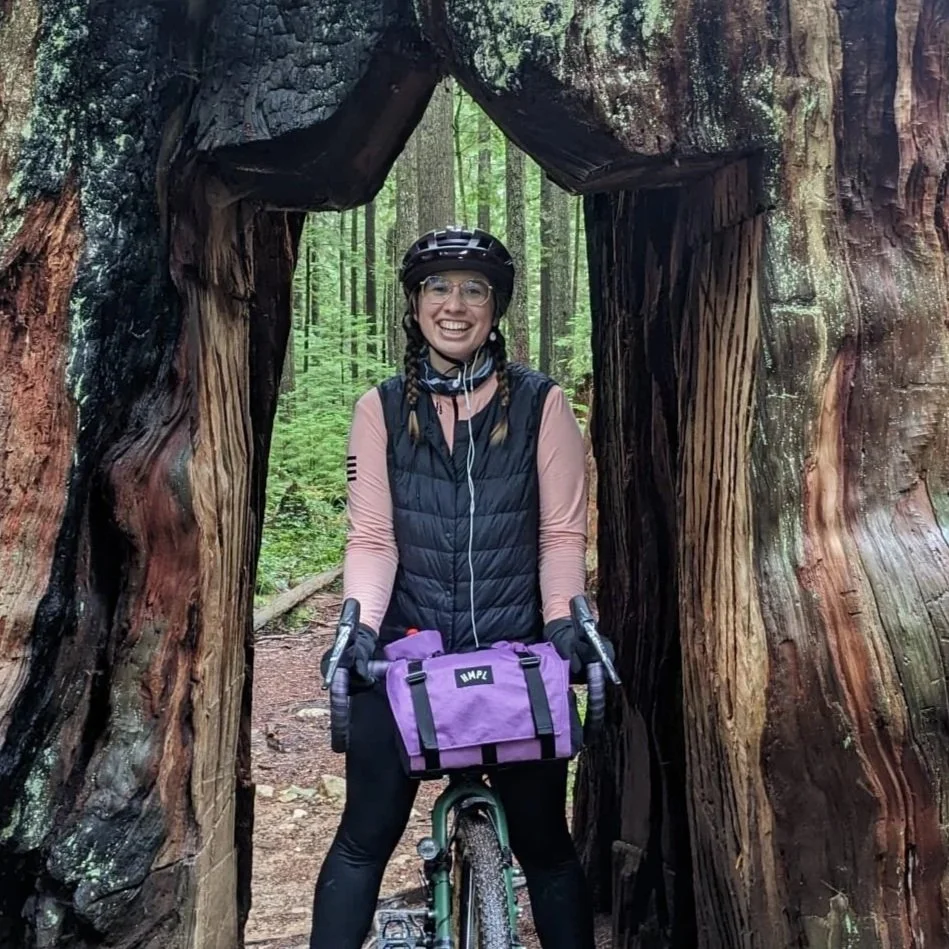
Maya Goldstein - Bike Bus Manager, HUB Cycling
Joanne Kautz-Allard - Program Manager, Society for Children & Youth of B.C.
Aliya Khan - Manager, Education, Capital Bike
Ildiko Kovacs - Child Friendly Communities Planner, Society for Children & Youth of B.C.
Ashley Parsons - Vancouver Island Walking School Bus Coordinator, Society for Children & Youth of B.C.
Xuedan Xu - Manager, Sustainable Mobility, Green Communities Canada






Building Community Leaders for Active Transportation and Mobility
Saanich Room
-
A hands-on toolkit for starting, growing and sustaining a local advocacy group
If you’ve ever poured your heart into local advocacy, you know how rewarding it can be, and how challenging. Volunteers get stretched thin, chairs end up carrying too much, and it’s not always clear who to turn to when a safety issue crosses municipal and provincial lines.
Join us for a hands-on morning focused on the realities of local advocacy. You’ll leave with practical tools, new ideas and a clearer plan for building a stronger, more sustainable group.
Drawing on decades of experience supporting volunteer-led Local Committees across Metro Vancouver and beyond, HUB Cycling will share what we’ve learned about what works, where groups get stuck and what can make advocacy more sustainable. Together with Evolve by BCAA, we’ll also invite you to help shape a new Community Advocacy Digital Resource Hub designed for advocates across BC.
Who should attend
Members of local cycling, walking, urbanist and active transportation groups
People who want to start a new group in their community
Community organizers, non-profit staff and volunteers
Anyone tired of advocating alone
Equity built in
Strong groups reflect the communities they serve. You'll learn practical ways to build diverse, inclusive coalitions from the start, including conversational equity practices that make meetings work for neurodivergent members and people who participate in different ways. You'll also explore how to begin respectful relationships with neighbouring First Nations as part of your partnership planning.
Make it a full advocacy day: Pair this morning session with the afternoon workshop, Great Stuff: Provincial AT Advocacy for Impact and Scale.
-
Learn the Engine Blueprint. Get a practical framework for a sustainable group: clear roles, effective meetings, hybrid and accessible participation, and inclusive decision-making that prevents chair burnout.
Audit the toolkit with your region. Work at a regional table (Metro Vancouver, Vancouver Island, Interior/Kootenays, Northern BC) to test-drive draft tools, such as persuasive letter templates and volunteer onboarding, and map how to adapt them for your community.
Map your partnerships. Learn five models for working with other organizations, from leading a project with outside support to co-managing or merging efforts. Then map the partners you want to build relationships with, including municipalities, school boards, businesses, regional transportation staff and First Nations.
Tackle real-world case studies. Work through rapid-fire scenarios: a safety gap on a provincial highway that your city can't fix, a new rural group finding its identity, and a committee on the edge of burnout.
You'll leave with:
Early access to the draft Community Advocacy Digital Resource Hub, and a say in what goes into the final version
A partnership map and action plan for your own community
Proven methods to recruit, onboard and keep volunteers
Strategies for staying locally rooted while plugging into a province-wide network
-
Leanne Buhler - General Manager | Head of Evolve (BCAA)
Rose Gardner - Executive Director, HUB Cycling
Jeff Leigh - Vancouver/UBC Local Committee Co-chair, HUB Cycling
Taylor MacVittie - Community Manager, HUB Cycling

Designing for People: Inside the Updated BC Active Transportation Planning and Design Guide
Oak Bay Room
-
Join staff from the Ministry of Transportation and Transit and Urban Systems for a workshop exploring the recent update to the BC Active Transportation Planning and Design Guide, BC’s premier resource for planning and designing high-quality active transportation infrastructure.
Since the first edition of the Guide in 2019, there have been significant changes in legislation, policy, and research impacting the transportation landscape, which have been included in this year’s update. The update Guide also represents a major step forward in professional practice from the first edition—it introduces a new approach to facility selection, expanded accessibility guidance, more detailed intersection design, and other improvements.
Through practical exercises based on real-world challenges, you’ll learn how the updated Guide can be applied and build confidence using the Guide in your day-to-day work. Key updates include:
Consideration of emerging mobility options, including e-bikes and micromobility devices;
Greater emphasis on multimodal integration and context-sensitive design.
Updated approaches to safety, comfort, and facility selection;
Enhanced accessibility guidance and integration of Accessible BC Act principles;
New guidance for rural and small communities, school neighbourhoods, and roundabouts, and;
Expanded guidance for active transportation within Ministry rights-of-way.Description text goes here
-
The Guide receiving this thorough training on the updated edition will bring participants up to date in the field of active transportation infrastructure planning and design, including:
Applying the updated Guide in a wide range of scenarios.
Active transportation implementation in rural and small communities
Designing for accessibility
The workshop will be highly interactive and will equip practitioners with hands-on learnings about that is consistent across the province. Many case studies featured in the Guide are from BC Indigenous communities and can serve as a model for both First Nations and local governments alike.
By the end of the session, you’ll have the tools and foundation to start applying the Guide on your next project.
-
Adam Krupper - Manager, Active Transportation | Connected Mobility and Transit | Ministry of Transportation and Transit
Brian Patterson - Senior Planner, Urban Systems


Add optional lunch to your workshop(s) at registration.
Great Stuff: Provincial AT Advocacy for Impact and Scale
Esquimalt Room
-
A working session by and for advocacy organizations working on bicycle and AT-related programs and causes, including:
Member-based associations, clubs and societies
Social enterprises and co-ops
Community groups and other NGOs
In this collaborative, discussion-driven workshop consisting of four 40-min 'waves', advocates from across the province will share lessons learned, program impacts, new ideas and success stories and lessons learned about approaches, programs and new opportunities to help your community’s AT advocacy move from good to great.
-
Wave 1 - From Words to Action
In 2026, the BCCC committed to reconciliation and recognition of Indigenous rights, title, and self-determination as part of advancing active transportation in British Columbia. Ashley Wright, Indigenous Relations and Strategy Consultant and Colin Stein, Executive Director of the BCCC, tell the story of this work, the process of addressing the need for structured, institutional commitments, and the development of a 4-phase framework for Indigenous engagement and reconciliation. Advocacy groups can use this framework as a guide to inform their own work.
Wave 1 also includes “Building Bike Sense, B.C.'s How-To Manual for Cycling”, a preview of the 8th edition, presented by Dr. Kay Teschke. This presentation provides details on updates to cycling information and safety guidance in Bike Sense, how it aligns with research evidence, and why it matters.
Wave 2 - Programs for Impact and Scale
Sarah Thomas, Executive Director of Our Community Bikes, shares real-life examples of how community-based repair services can function as essential “soft infrastructure”, and how community access to repair and mobility supports can empower individuals facing barriers to transportation, improve independence, and strengthen resilience. Drawing on lessons from Vancouver's Downtown Eastside, “Advancing transportation justice with community repair clinics” will present a practical and replicable model that communities across B.C.can adapt to improve access to active transportation while advancing social, environmental, and health outcomes.
Also in Wave 2, Brooke Jones and Andrew Murray of Nelson & Area Community Transportation present “Community Cycling Education - A Strategy & Implementation Plan”, a strategic, practical framework for implementing inclusive, safe, and developmentally appropriate cycling education for pre-school-aged children, school-aged youth, and the general population. Includes pathways for implementation and adaptations for specific local contexts, and considerations for equity and inclusion, e-bikes, and rules of the road.
Wave 3 - Tech Showcase
Cedric Eveleigh, co-founder and lead engineer of Bike Lane Sweeper, shares the story of a successful grassroots initiative that used community crowdfunding and a locally-designed bike lane sweeper to keep local bike lanes debris-free. The lesson? Community-funded action can help improve transportation safety when governments are too slow.
Marketwurks founder Chris Quinlan shares his mobile app for bike valet check-ins, which doubles as a user survey solution for provincially-funded bike valet operations.
Wave 4 - Advocacy Panel “Desire Lines”
A discussion about ally-ship between advocacy organizations coming from different interests and motivations, but working towards common goals: reduced VKTs, GHG's, casualty crashes and barriers to transportation. Facilitated by the BC Cycling Coalition, panelists will discuss common themes around capacity constraints, self-selection bias, emotion vs evidence, and the challenges of public engagement today.
-
This session workshops support the work of organizations to align with local and provincial AT goals, to reduce barriers to active transportation for all ages and abilities in communities across BC, and to strengthen advocacy partnerships across the education sector, for small and local businesses, for community-serving bodies and groups, and and lobby organizations.
By attending this workshop, advocates will get practical takeaways to apply immediately towards:
a curriculum, support, and partnership strategies for cycling education programs in schools and communities
a replicable model for creating AT programs focused on equity and accessibility
a scalable, cost-effective model that increases access to bicycles and mobility devices for people experiencing barriers to transportation
practical lessons for organizations seeking equitable approaches to mobility.
ways to use storytelling, events, and community engagement to help build public support for active transportation
a replicable crowdfunding blueprint for setting up a community-funded road maintenance support
a strategy for understanding government maintenance contracts
-
Lead facilitators: Dr. Kay Teschke (UBC), Ashley Wright & Colin Stein (BC Cycling Coalition)
Co-facilitator(s): Brooke Jones, Andrew Murray (Nelson & Area Community Transportation), Cedric Eveleigh (Bike Lane Sweeper), Ian MacKichan (Capital Bike), Chris Quinlan (Check Your Stuff), Quentin Randall (GoByBike BC Society), Margie Sanderson (Vision Zero Vancouver), Sarah Thomas (Our Community Bikes)






BC’s evolving transportation landscape: regulating new and emerging modes of transportation under the Motor Vehicle Act
Oak Bay Room
-
This three-part session focuses on BC’s evolving transportation landscape, including the emergence of new forms of personal mobility like e-bikes and electric kick scooters. Ministry staff will overview how devices are classified and regulated under the Motor Vehicle Act and the process for authorizing new types for highway use. The important role of pilot projects will be discussed and how they enable the development and testing of new regulatory frameworks.
Regulating Personal Mobility Devices
What makes a motorized device legal (or illegal) for use on public roads? Why are some things like e-bikes legal, while others like electric unicycles are not? This presentation will overview how BC regulates personal mobility devices under the Motor Vehicle Act. Ministry staff will explain how BC’s framework works and what rules apply to different types of personal mobility devices. Safety considerations will be discussed and what it takes for new types of devices to become street legal.
Electric Kick Scooter Pilot Project Update
This spring marked the halfway point of the four-year Electric Kick Scooter Pilot Project. Data has been collected for the first two years of the pilot project, which currently has 37 participating communities. Ministry staff will overview the pilot project, methods of data collection and analysis, and results from years one and two. Plans for years three and four of the pilot will also be discussed, along with a future decision on whether to permanently regulate these devices when the pilot project ends in April 2028.
Future Motor Vehicle Act Pilot Projects
Pilot projects provide opportunity for controlled testing of new transportation-related matters and experimental regulatory frameworks. They also enable the collection and analysis of data to help inform key decisions on transportation-related topics. Ministry staff will explain the process for establishing new pilot projects, including application requirements, assessment criteria and decision-making processes. Potential future pilot projects will be discussed and how they are critical to shaping BC’s future transportation landscape.
The target audience for this workshop includes:
active transportation advocacy groups
law enforcement organizations
municipal transportation staff and elected officials
shared mobility, transit and transportation service providers
transportation planners
-
Attendees of this workshop will have the opportunity to engage with Ministry staff and learn about a range of regulatory matters, including:
What types of devices are legal for highway use in BC
What rules apply to certain categories of devices and why
The role of evidence-based pilot projects in shaping the future of transportation in BC
Interim results from BC’s Electric Kick Scooter Pilot Project and next steps
The process for establishing new pilot projects and legal, safety, and policy considerations
-
Facilitators: Katia Gauvin, Bradley Gerhart (Ministry of Transportation and Transit)

Mode Shift Starts at the Rack: Reimagining Micromobility Parking as a Behaviour Change Tool
Saanich Room
-
We don't decide to cycle, scoot, or ride once. We decide it every single trip. And one of the quietest factors shaping that decision happens at the very end of the ride: will my e-bike be safe here? Is there somewhere to park my cargo bike easily? Is it worth the hassle of making this trip with my e-bike/cargo bike/e-scooter?
BC has invested heavily in getting people moving - cycling infrastructure, active transportation networks, and a fast-growing fleet of e-bikes, cargo bikes, and scooters. But when it comes to what happens when the ride ends or at stopovers, that gap is quietly shaping rider behaviour in ways most planning conversations miss. Uncertainty about parking and security doesn't just cause frustration, it changes what trips people are willing to take, which modes they trust for everyday use, and whether they stick with micromobility long enough for it to become a habit.
This interactive workshop explores that connection directly: how end-of-trip infrastructure shapes rider confidence, decision-making, and ultimately, mode shift. Drawing on real examples from municipalities, campuses, transit hubs, and shared mobility systems across North America and Europe, you'll examine what actually changes rider behaviour, and what looks good on paper but doesn't move the needle. The session includes a hands-on look at real-world parking solutions, giving you a concrete reference point for the ideas discussed. -
Insight into how parking and end-of-trip experience shape rider confidence, decision-making, and long-term mode shift
A working knowledge of how leading communities are approaching storage and end-of-trip infrastructure, and the outcomes they're seeing
A deeper understanding of the parking and storage challenges specific to e-bikes, cargo bikes, scooters, and shared micromobility
Frameworks and ideas you can bring back to your own municipality, campus, or organization to support real behaviour change
-
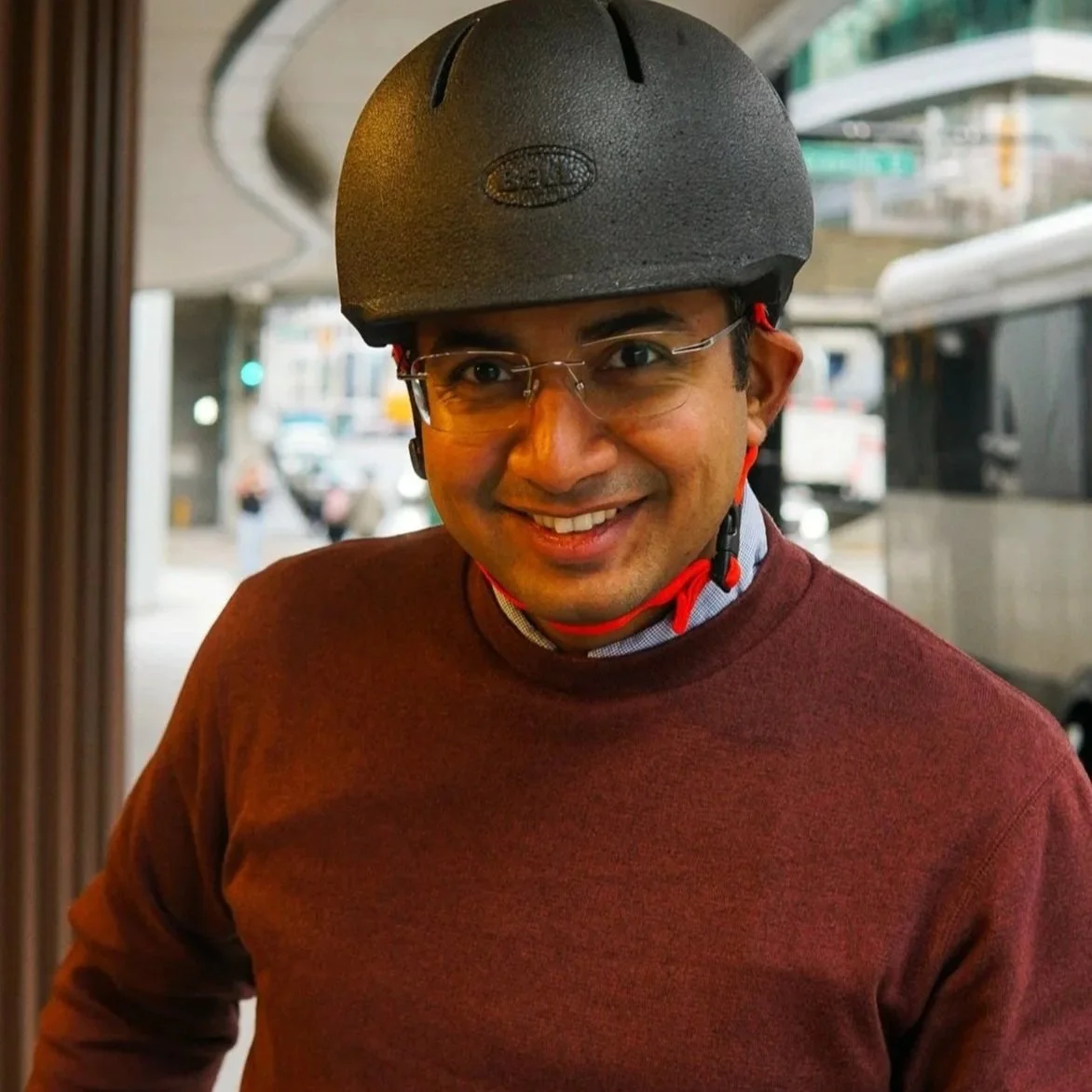
Venkatesh Gopal (movmi), Kosta Chatzi Spiros (Urban Racks)


Leanne Buhler is the General Manager of Evolve E-Bike and E-Scooter Share at BCAA, where she leads the strategy, operations, and growth of one of Canada’s largest shared micromobility programs. Since launching Evolve, Leanne has spearheaded the service from a pilot project to a trusted transportation network serving communities across BC. She is passionate about creating practical, sustainable transportation options that make it easier for people to get around their cities. With experience spanning innovation, business development, transportation, and new venture growth, Leanne specializes in building and scaling programs that deliver both community and business value. She works closely with municipalities, transportation agencies, and community partners to advance shared mobility solutions that are safe, accessible, and responsive to local needs. A recognized leader in the micromobility sector, Leanne regularly engages in conversations about active transportation, transportation policy, rider education, and the role of shared mobility in creating healthier, more connected communities.