
Visibility
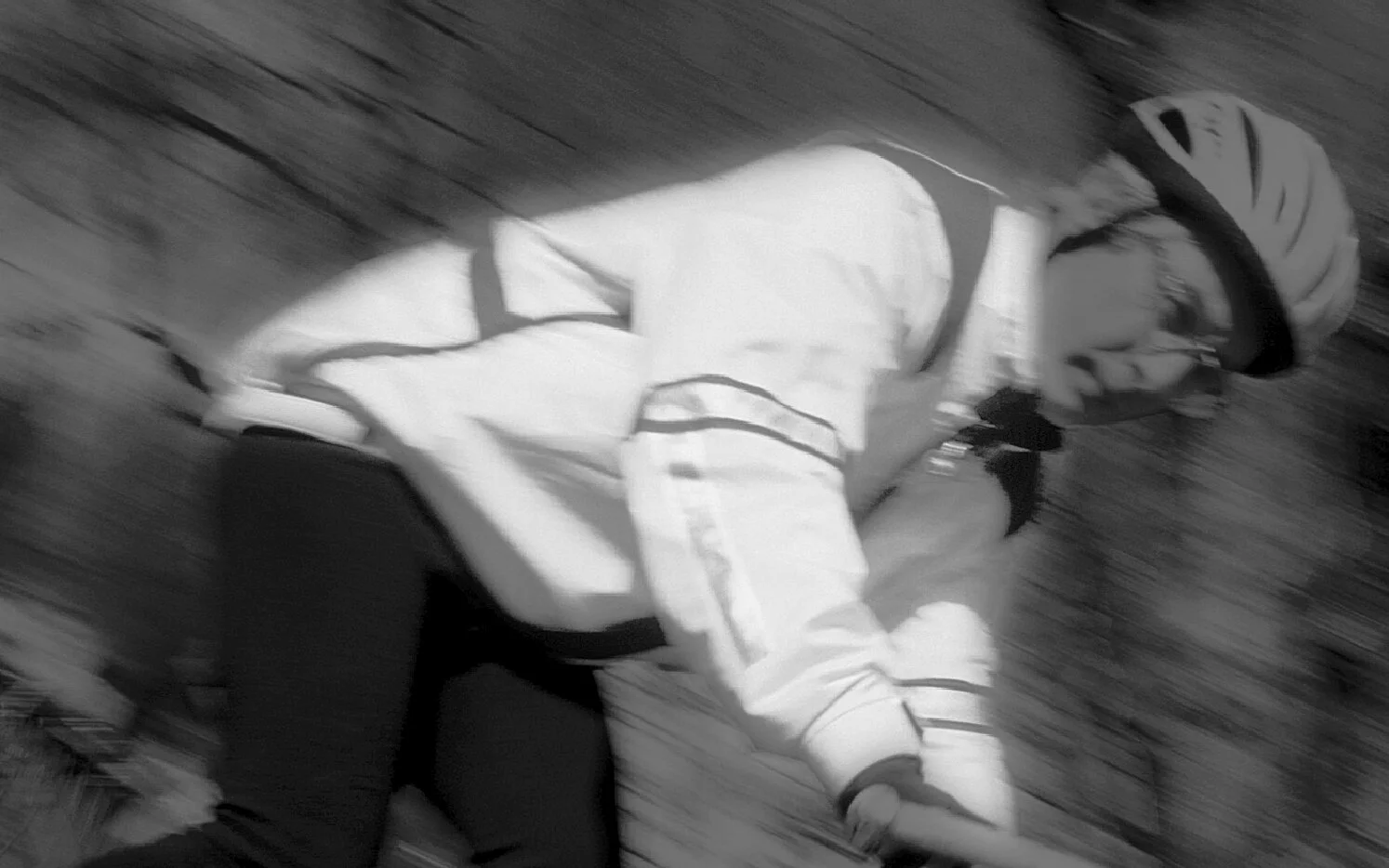

With proper equipment and cycling skills, a cyclist can be highly visible and thereby avoid general risks.
The most common comment made by a driver in a vehicle/cyclist collision is, “I didn’t see them”. The next is, “I couldn’t see them”.
BE CONSPICUOUS!
Position yourself where motorists are looking
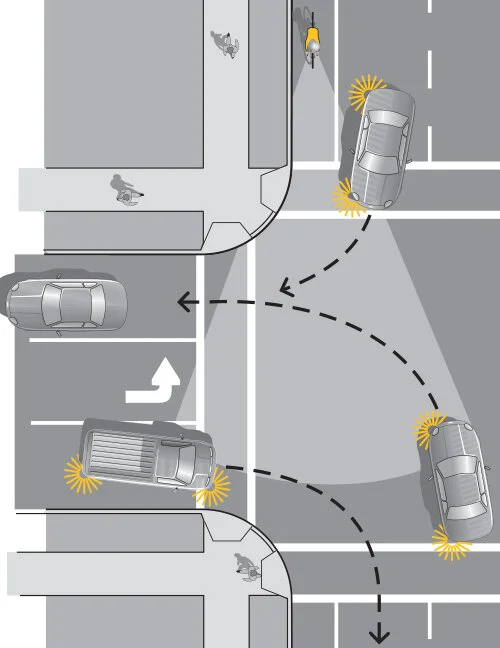
The law requires cyclists to keep to the right, but that does not mean hugging the curb. You should be approximately one metre away from the curb, both to reduce the risk of hitting the curb or debris, and also to better place yourself within the motorists’ field of vision. This allows you to move away from traffic to avoid an obstacle, an open door, or crowding by another vehicle. Avoid riding in a motorist’s blind spot.
Do not pass on the right
Do not pass moving traffic on the motorists’ right side, since car drivers do not expect anything to interfere with a right turn from the right lane, and, as such, often neglect to shoulder check. Sometimes cars also drift close to the right edge of the road if the driver cannot see any reason not to. See page 18 for more discussion on passing on the right.
Turn on your lights
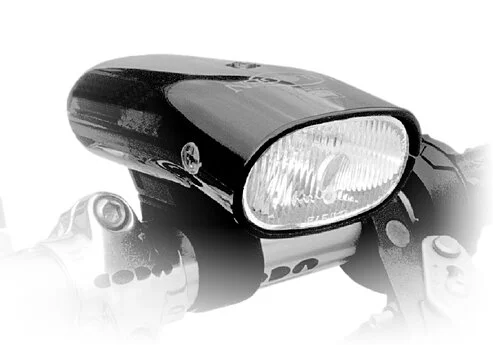
Turn on your lights, front and rear, whenever visibility is reduced. Aim your rear light to the traffic behind you and aim your front light on an angle for vehicles to see you and for you to be able to see the road. You need to BE SEEN, and be able to see the road, as well.
Consider increasing the strength of your lights
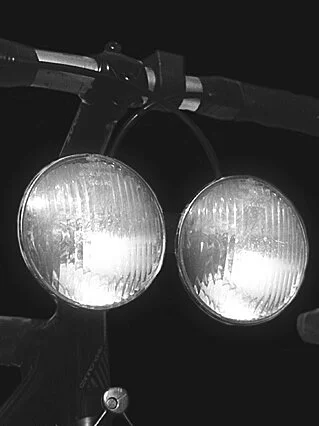
Dual headlights will allow you to aim one toward oncoming traffic and one at the road ahead of you. Make sure the batteries for your lights are fully charged and consider carrying a spare.
Wear brightly coloured clothing
Wear brightly coloured clothing such as neon green, yellow and orange, and/or wear a safety vest.

As a narrower vehicle, cyclists can be less visible to motorists. It is therefore extra important for cyclists to use every means available to make themselves conspicuous.
It is particularly important to increase your visibility to others in the dark, at dawn or dusk, or in difficult weather conditions such as rain, fog, or snow.
Put reflective materials on your bicycle and clothing
Put reflective materials on your bicycle and clothing, including front forks and rear stays, wheels, pedals, helmets, wrists and ankles. Reflective bands or lights on wrists make your hand signals more visible.
Be aware
Be aware that lights and reflectors are primarily useful for traffic coming from behind or ahead. Cars coming from the side may have trouble seeing you regardless of your lights. Reflective tape and devices on the frame of your bike will allow you to be seen by others from more angles. It is particularly important to increase your visibility in the dark or in difficult weather conditions such as rain, fog, snow, dawn, or dusk.